
Features
1) Halogen-free and low toxicity: It overcomes the shortcomings of halogenated flame retardants, which tend to emit irritating and corrosive gases and smoke, produce numerous molten droplets, and are prone to cause asphyxiation.
2) Excellent thermal stability and high flame retardant efficiency: high decomposition temperature, with an initial decomposition temperature of ≥250℃ (based on 5% mass loss), and easy crosslinking to form carbon at high temperatures;
3) No hydrolysis, no precipitation, good compatibility: It is hydrophobic and has good compatibility with polymer substrates, overcoming the shortcomings of traditional carbonization agents such as easy migration, easy hydrolysis, and reaction with ammonium polyphosphate to form phosphates during processing.
4) Minimal impact on the physical and mechanical properties of materials: It overcomes the adverse effects of inorganic flame retardants on the mechanical and processing properties of materials due to their large addition amounts;
2) Excellent thermal stability and high flame retardant efficiency: high decomposition temperature, with an initial decomposition temperature of ≥250℃ (based on 5% mass loss), and easy crosslinking to form carbon at high temperatures;
3) No hydrolysis, no precipitation, good compatibility: It is hydrophobic and has good compatibility with polymer substrates, overcoming the shortcomings of traditional carbonization agents such as easy migration, easy hydrolysis, and reaction with ammonium polyphosphate to form phosphates during processing.
4) Minimal impact on the physical and mechanical properties of materials: It overcomes the adverse effects of inorganic flame retardants on the mechanical and processing properties of materials due to their large addition amounts;
Typical performance
Performance | Value | Unit | Method |
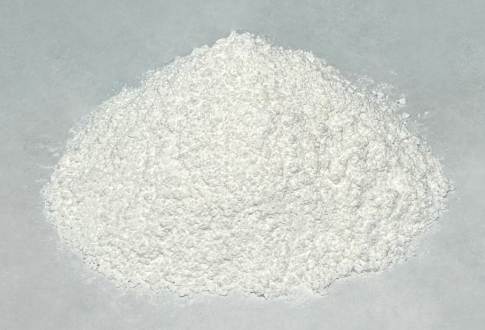
Appearance | white powder | / | visual estimation |
Density | 0.85-1.05 | g/cm3 | ASTM D4052 |
Particle size(D50) | ≤5 | μm | Laser Particle Size Analyzer |
5%Thermogravimetric temperatureT5% | 378 | ℃ | DSC/TGA |
Melting temperatureTm | / | ℃ | DSC/TGA |
Residual carbon content(800℃,nitrogen atmosphere) | ≥40 | ℃ | DSC/TGA |
Instructions for use
It can be compounded with polyphosphoric amine, polyphosphoric melamine, red phosphorus, inorganic hypophosphites, and organic hypophosphites to form a composite intumescent flame retardant (IFR) system.