

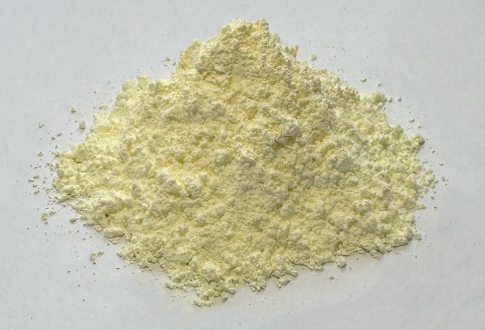
Features
•The processing window time is long | •It possesses excellent mechanical properties, including high bending strength, high modulus, and high compressive strength | •High thermal oxidation stability |
•High dimensional stability | •Chemical resistance, electrical resistance, wear resistance, and heat resistance | •Low creep, low outgassing |
•low toxicity |
Usage
•In the aerospace field, such as aircraft engine components, spacecraft covers, etc | •The matrix materials of biomedical implants, such as artificial joints and dental implants | •Medical protective equipment, such as gloves, goggles, etc |
•Wear-resistant pads, wear-resistant strips, and pipe clamps | •Wear-resistant components in centrifugal pumps | •Water supply pump for hydrocarbons and chemicals |
Typical performance
Performance | Value | Unit | Method |
Color | Tawny | / | / |
Density | 1.42 | g/cm3 | GB/T 1033.1-2008 |
| Tensile strength | ≥100 | MPa | GB/T 1040.1-2008 |
| Elongation at break | ≥6.0 | % | GB/T 1040.1-2008 |
| Bending strength | ≥150 | MPa | GB/T 9341-2008 |
| Flexural modulus | ≥2800 | GPa | GB/T 9341-2008 |
Notched impact strength | ≥120 | kJ/m2 | GB/T 1043.1-2008 |
| Compressive strength | ≥200 | MPa | GBT1041-2008 |
| Rockwell hardness | ≥90 | HRE | GB/T 3398.2-2008 |
| Water absorption | 0.24 | % | GB/T 1462-2005 |
| Coefficient of thermal expansion(CTE) | 42(23~350℃) | ppm/K | GBT36800.2-2018 |
| Glass transition temperature(Tg) | 330 | ℃ | ASTMD4065-12 |